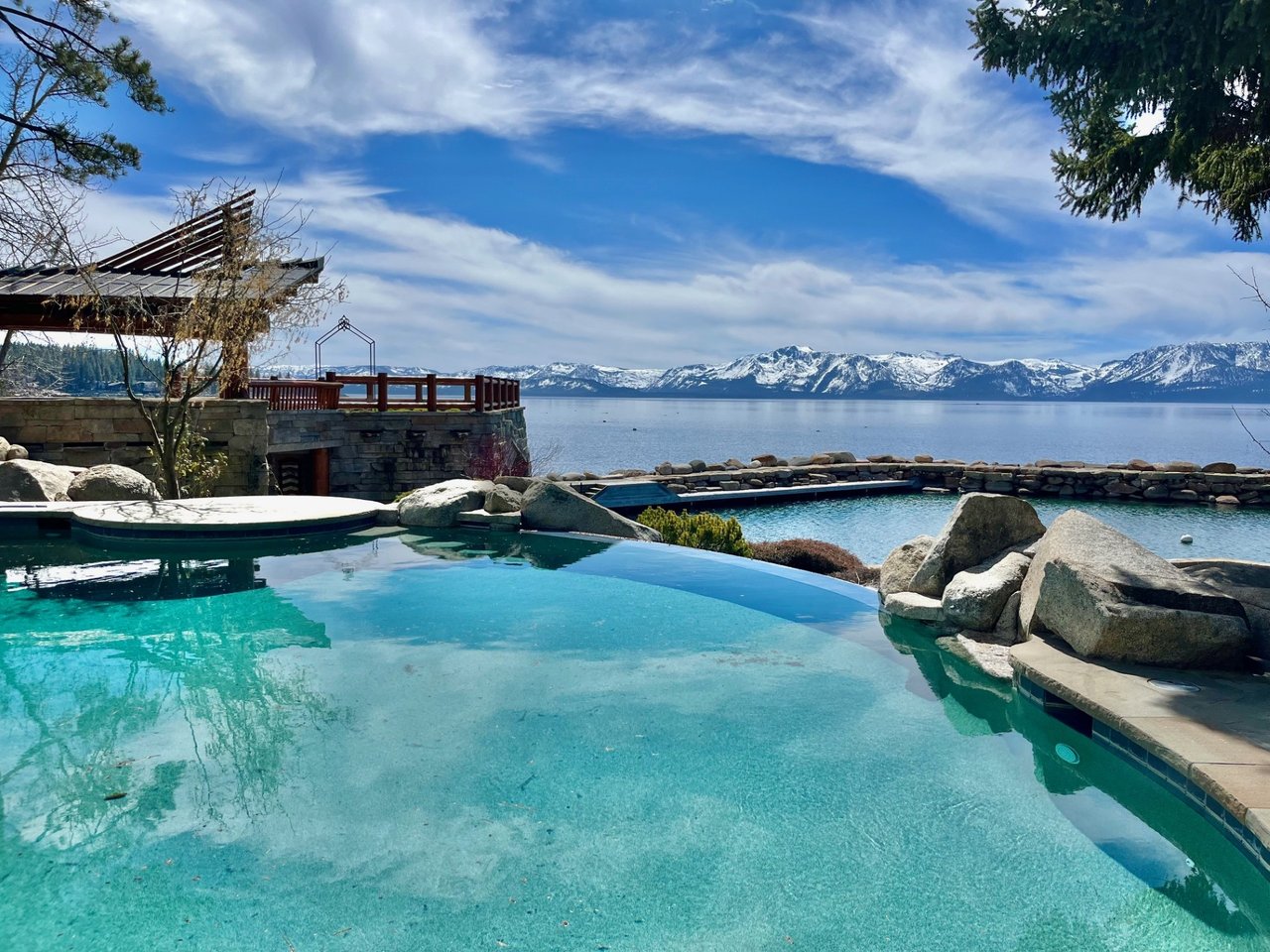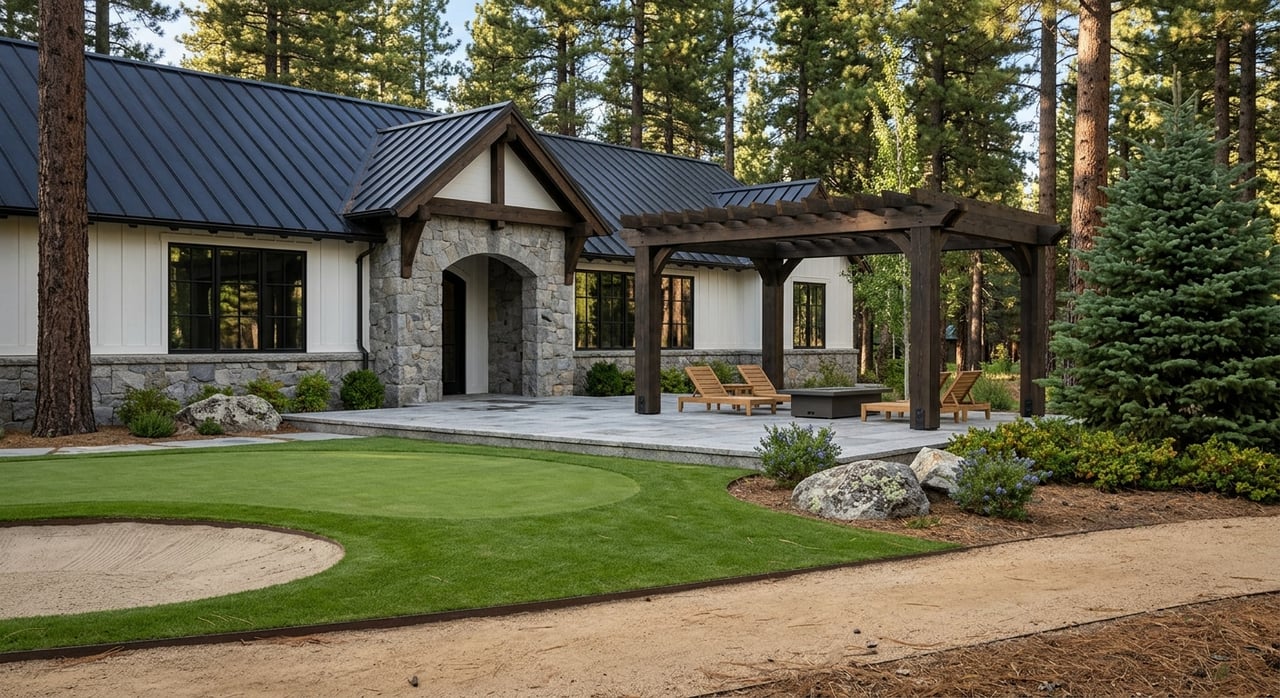
If you are drawn to Lake Tahoe but want a setting that feels quieter, more private, and more structured than a typical resort area, Glenbrook and Uppaway stand out right away. These are not high-traffic communities built around constant public activity. Instead, they offer a low-density lifestyle shaped by club access, shoreline routines, and a strong sense of stewardship. Let’s take a closer look at what daily life inside Glenbrook and Uppaway’s private club communities actually feels like.
Glenbrook feels private by design
Glenbrook is a historic lakeshore community on Tahoe’s eastern side in Douglas County, and its physical layout tells you a lot about the lifestyle. According to the Glenbrook HOA, only 150 of its 750 acres have been developed, with nearly 600 acres left undisturbed. That limited buildout helps preserve the area’s spacious feel and gives the community a more settled, established character.
Douglas County’s master plan also identifies Glenbrook as a historic site connected to a major milling operation. That history matters because it helps explain why Glenbrook feels different from a newer luxury subdivision. It is not just exclusive. It also carries a long-standing identity shaped by the land, the shoreline, and decades of local governance.
Private club life centers the experience
In Glenbrook, private club living is a core part of the community experience. The Glenbrook Club offers resident and limited non-resident memberships, which means access is intentionally curated rather than open to the public. For many buyers, that distinction is part of the appeal.
The club’s golf course is one of the main anchors of daily life. The club describes it as a 100-year-old, 2,715-yard course with undulating terrain and Lake Tahoe views. It is not about oversized resort energy. It is about a more intimate and relaxed setting.
Dining adds another layer to that rhythm. The clubhouse is open year-round to members and guests, with grab-and-go service, a full-service bar, and brunch, lunch, and dinner. Indoor seating and outdoor dining on the lakeside deck or golf-course patio help make the club a recurring social hub rather than a once-in-a-while amenity.
The club also notes a robust social event calendar. That supports a lifestyle where you can have regular points of connection without relying on crowded public venues. In practical terms, private club life here means member-based access, recurring social traditions, and a day-to-day pace that stays close to home.
Shared spaces shape the Tahoe routine
Life in Glenbrook extends beyond the clubhouse. The HOA’s common-area agreement names beach areas, forest and meadow areas, hiking areas, Yerington Park, and China Gardens Park as shared spaces. That amenity mix creates a very Tahoe-specific lifestyle centered on outdoor access and routine use of the shoreline.
The HOA budget and forms also point to how residents use the community. Glenbrook includes categories and requests related to buoys, piers, beach access, boats, and golf carts. That suggests boating logistics and golf-cart mobility are not occasional extras. They are ordinary parts of how many residents move through the community and enjoy the property.
This is one of the clearest differences between Glenbrook and more commercially oriented Tahoe areas. The rhythm here is often simple and consistent: time on the lake, time on the course, and dinner back at the club. If you value a lifestyle with fewer outside distractions and more internal continuity, that pattern may feel especially appealing.
HOA structure plays a big role
Glenbrook’s lifestyle is private, but it is not informal. The HOA is deeply involved in how the community functions. It provides leadership, architectural control, covenant enforcement, community events, accounting and finance, and operation and maintenance of recreation facilities.
Residents can also participate in committees, which shows that community life is not just managed from a distance. It is structured, organized, and shaped through ongoing resident involvement. For buyers who appreciate order and clear standards, that can be a meaningful benefit.
That same structure carries into events and guest use. The common-area use agreement limits amplified sound to 9:00 p.m. Sunday through Thursday and 10:00 p.m. Friday and Saturday. Events with more than 100 guests need extra approval, and guest lists must be submitted 48 hours in advance for gate coordination.
There are also blackout periods around Memorial Day, Independence Day, and Labor Day when event reservations are restricted. These details tell you something important about the social environment. Glenbrook is active and social, but it is intentionally neighbor-aware and carefully managed.
Daily life includes etiquette and stewardship
One of the defining features of Glenbrook is how much daily life is shaped by etiquette and environmental awareness. Residents are asked to use bear-safe dumpsters, keep household trash out of common-area containers, use dog waste stations, leash pets in common elements and beaches, and follow rules that prohibit fireworks and fires. These are not just housekeeping details. They are part of living responsibly in a forested Tahoe setting.
Gate procedures also reinforce the community’s private nature. Access is managed through cards, pins, and call-in systems, which helps keep entry controlled. When you combine that with the internal use of golf carts, the result is a community that feels both low-speed and highly regulated.
Wildfire readiness is another normal part of ownership here. Glenbrook’s evacuation guidance tells residents to have a plan and notes that evacuation must happen quickly. In a place like this, privacy and beauty come with a real need for preparation and awareness.
Uppaway offers an even quieter scale
While Glenbrook has a strong club-centered identity, Uppaway is smaller and more purely residential in feel. TRPA described Uppaway Estates as a planned unit development with 39 parcels and a common area. Douglas County later described it as a gated community with 29 single-family residences, a single-lane one-way road, and three attached cul-de-sacs.
Even allowing for those different public descriptions, the overall picture is clear. Uppaway is a very small neighborhood by design. That scale supports a quieter environment with less turnover and fewer moving parts than a larger community.
Douglas County also lists Uppaway among the neighborhoods where no vacation-home-rental permits are allowed. For buyers thinking about day-to-day atmosphere, that policy matters. It reinforces Uppaway’s private, residential character and helps explain why the area is often viewed as especially calm and insulated.
Glenbrook and Uppaway are similar, but not the same
Both communities appeal to buyers who value privacy, limited density, and a more controlled Tahoe experience. Still, they offer that lifestyle in slightly different ways. Glenbrook is the more club-centric environment, while Uppaway reads as the smaller gated enclave nearby.
Here is a simple comparison:
| Community | Main Feel | Scale | Social Pattern | Access Style |
|---|---|---|---|---|
| Glenbrook | Historic, club-centered, low-density | 750 acres with only 150 developed | Club dining, golf, HOA events, shared common areas | Private community with managed gate access and club membership structure |
| Uppaway | Small, gated, residential | County documents describe a very small enclave | Quiet residential rhythm | Gated setting with no vacation-home-rental permits |
For some buyers, Glenbrook’s club, golf, and shoreline routine will be the draw. For others, Uppaway’s size and quieter residential character may feel like the better fit. The right choice depends on whether you want more built-in social structure or more of a tucked-away neighborhood atmosphere.
What private community living really means here
The phrase private club community can mean different things in different markets. In Glenbrook and nearby Uppaway, it does not mean nonstop resort programming or public-facing luxury. It means a measured, regulated way of living where access, activity, and social life are intentionally shaped.
That is what makes these communities distinctive on Tahoe’s East Shore. You are not just buying a home. You are stepping into a setting where shoreline access, club dining, golf-cart movement, gate procedures, wildlife awareness, and quiet-hours policies all help define the pace of everyday life.
For buyers and sellers in this part of the market, understanding those details matters. In communities this private and nuanced, the lifestyle is inseparable from the real estate.
If you are considering buying or selling in Glenbrook or exploring East Shore opportunities that require local context and discreet guidance, Lexi Cerretti can help you navigate the market with a tailored, high-touch approach.
FAQs
What is private club life like in Glenbrook?
- Private club life in Glenbrook centers on member-based access, year-round clubhouse dining, golf, and a social calendar that is organized but more relaxed and contained than a public resort setting.
How developed is the Glenbrook community?
- According to the Glenbrook HOA, only 150 of 750 acres have been developed, with nearly 600 acres remaining undisturbed.
How social is the Glenbrook community for residents?
- Glenbrook has community events, club dining, and resident committee participation, but social activity is guided by HOA rules, guest procedures, and noise limits that keep the environment orderly.
How private is Uppaway in Glenbrook, Nevada?
- Uppaway is very private by scale and policy, with county documents describing a small gated neighborhood and no vacation-home-rental permits allowed there.
What daily routines shape life in Glenbrook?
- Daily life often includes shoreline use, boating logistics, golf-cart mobility, bear-aware trash practices, pet rules, controlled gate access, and wildfire preparedness.