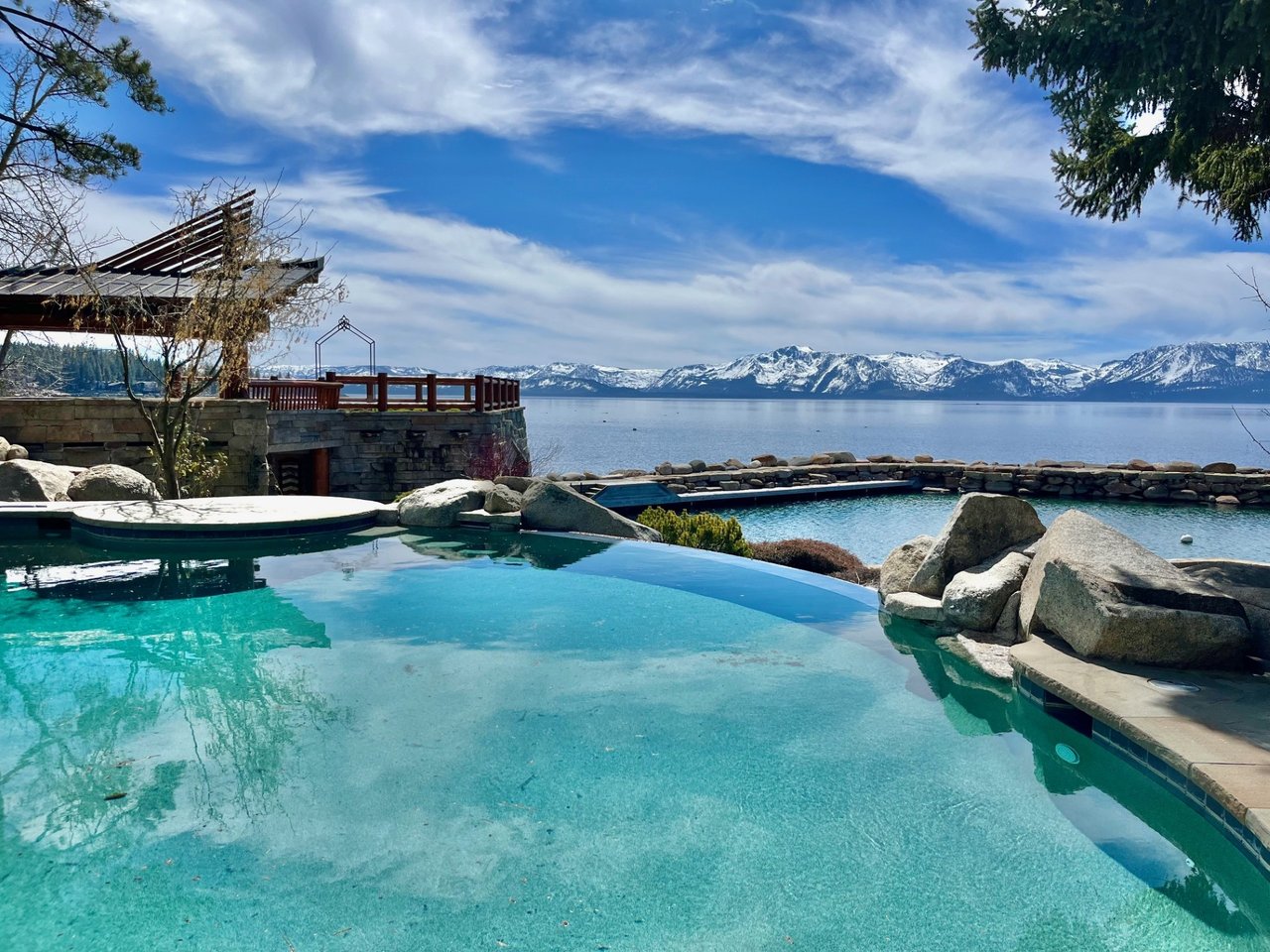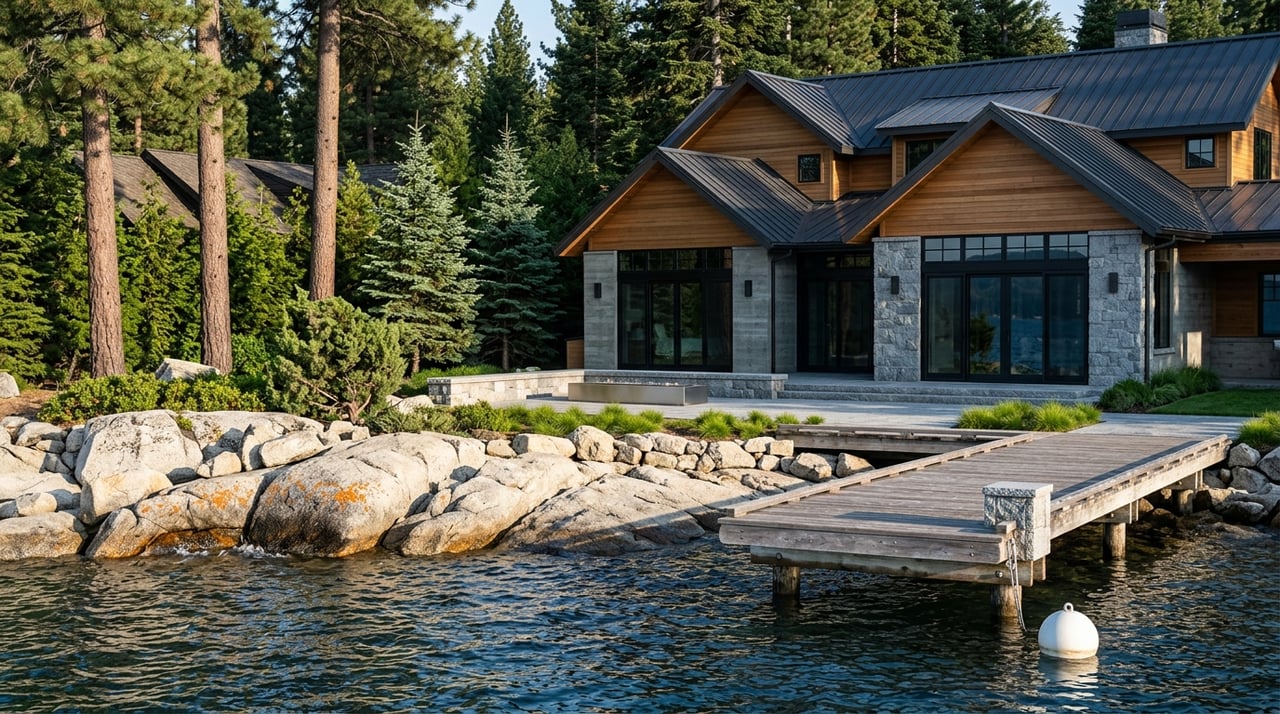
Not all Lake Tahoe lakefront homes are created equal. A property can sit on the water, offer sweeping views, and still fall short of what the market would consider a true trophy asset. If you are buying, selling, or simply trying to understand what separates the exceptional from the merely impressive, it helps to look beyond square footage and finishes. Let’s dive in.
Trophy Value Starts With Scarcity
A true trophy Lake Tahoe lakefront begins with something no one can manufacture: scarcity. Lake Tahoe’s shoreline is finite, and on the California side that scarcity is made even more meaningful by layered shoreline rules and limited opportunities for new private infrastructure.
According to TRPA’s Shoreline Plan, new private shoreline infrastructure is capped basin-wide. The plan allows up to 128 new private piers and 1,486 new private moorings, with piers allocated through a biannual process and moorings through an annual lottery. That means an existing, legal pier or registered mooring is not just an amenity. It is part of the property’s core value.
For buyers in the 96150 area and the El Dorado County side of the basin, this distinction matters. A parcel with current, lawful shoreline improvements is very different from a parcel that may only have the possibility of seeking future approvals.
Direct Shoreline Position Matters
A trophy property should offer direct shoreline access, not just proximity to the lake. In practical terms, that means the parcel itself has a true waterfront position with meaningful frontage and usable access to the water.
At Tahoe, frontage is more than a visual feature. TRPA shorezone application materials require detailed review of parcel size, length of lake frontage, shoreline contours, setbacks, and adjacent shoreline structures. For buoy fields, even calculated capacity is tied directly to lake frontage, which shows how much frontage can affect real-world utility.
This is why two homes with similar views can carry very different values. If one site has stronger frontage, better geometry, and more functional shoreline access, it may offer a far more compelling ownership experience.
Usable Access Is Better Than Theoretical Access
For a lakefront property to earn true trophy status, access must be legal, practical, and easy to use. It is not enough for a parcel to touch the lake if the shoreline is difficult to improve, constrained by setbacks, or limited by permit conditions.
TRPA requires existing moorings to be registered, and new piers and moorings go through separate allocation and permitting systems. In shorezone review, applicants must also address visible mass, setbacks from neighboring parcels, and spacing from other shoreline structures. Those details can determine whether a waterfront improvement works well in everyday life or becomes difficult to use.
For many luxury buyers, the real question is simple: can you get on the water comfortably, legally, and without friction? If the answer is yes, the property moves much closer to true trophy territory.
The Lot Must Be Functional
A beautiful shoreline alone does not make a great estate parcel. The lot itself has to be usable, with a practical building envelope and enough flexibility to support the home and lifestyle you want.
TRPA treats land coverage as a core environmental control to protect lake clarity. Allowable coverage depends on land capability, IPES, and the older Bailey system. Sensitive stream environment zones can also affect what is possible, since these areas may include wetlands, riparian areas, beaches, and other land influenced by surface or groundwater.
That means a property can look ideal from the water and still be limited on land. A stronger trophy parcel usually has a cleaner building envelope and fewer conflicts with coverage or sensitive-area constraints.
Public Trust Easement Is Part Of The Analysis
On the California side of Lake Tahoe, understanding the water’s edge is essential. Even where fee title is privately owned, the area between the ordinary low-water mark and ordinary high-water mark at navigable non-tidal waters like Lake Tahoe is subject to the Public Trust Easement.
For you as a buyer or seller, this means ownership at the shoreline may not translate into unrestricted private control all the way to the waterline. Any serious evaluation of a California lakefront should begin with title review, state lands considerations, and shorezone permitting history.
This is one of the clearest differences between a standard waterfront impression and a true trophy analysis. The best properties are not only visually compelling. They are also clear in their rights, history, and practical use.
Permit History Adds Confidence
In South Lake Tahoe and the broader El Dorado County side of the basin, lakefront work often involves more than one layer of review. TRPA notes that many projects require both a TRPA environmental permit and a separate local permit, and El Dorado County specifically notes that lakefront properties require TRPA review.
The City of South Lake Tahoe building division also reviews projects for compliance with California Building Code, TRPA regulations, and city ordinances. For you, that means permit history is not a small administrative detail. It is a key part of understanding whether shoreline improvements, additions, or changes were properly reviewed and approved.
A true trophy property typically comes with a cleaner paper trail. That clarity can support value today and reduce uncertainty later.
Boating Function Drives Premium Value
Lakefront living at Tahoe is about more than views from the deck. For many owners, the real luxury is how easily the property connects you to the lake itself.
TRPA’s Shoreline Plan includes no-wake buffers around shoreline structures and around swimmers and paddlers. Because of that, the experience of the water right in front of the home matters. Calm, convenient, and practical access tends to feel very different from a frontage that is technically on the lake but less usable day to day.
This is one reason the best lakefronts command a premium. They make boating, swimming, paddling, and waterfront living feel seamless rather than complicated.
Privacy Is More Than Distance
At Lake Tahoe, privacy is not just about having space between homes. It is also about how the home, grounds, and shoreline improvements are arranged from the street and from the water.
TRPA treats the shoreline as a scenic resource area and applies scenic standards and design review to projects visible from the lake. Its guidance favors structures that recede into the landscape, use dark earth-tone or matte finishes, minimize reflectivity, and keep shoreline elements visually restrained.
That framework helps explain why certain estates feel especially elevated. The strongest properties create a sense of retreat and discretion while still preserving views and functional outdoor living.
Architecture Should Fit Tahoe’s Setting
A trophy lakefront should feel as though it belongs on the site. That does not mean it has to be small or understated. It means the architecture should work with Tahoe’s natural setting rather than compete with it.
TRPA’s scenic guidance encourages design choices that reduce visual intrusion from the lake. This includes subdued finishes, limited reflectivity, screened mechanical equipment, and piers that remain visually slender. Where feasible, multiple-use piers are also encouraged to reduce the appearance of shoreline clutter.
For luxury buyers and sellers, this reinforces an important point: trophy value is not just about cost or scale. It is about the quality of integration between the residence, the landscape, and the shoreline.
What Defines A True Trophy Lakefront
If you want the clearest working definition, it is this: a true trophy Lake Tahoe lakefront is a parcel with direct shoreline position and legally usable access that is rare in pier or buoy potential, efficient in lot geometry, strong in privacy, and architecturally integrated with Tahoe’s scenic environment.
On the California South Shore, including the 96150 area and El Dorado County side of the basin, that definition also depends on a clear permit history and confirmation of public-trust and shoreline rights. In other words, the best properties combine beauty with utility, and rarity with legal clarity.
Whether you are evaluating a potential purchase or preparing a significant waterfront property for sale, those are the features that usually separate a memorable lakefront from a truly irreplaceable one.
If you are considering a Lake Tahoe waterfront purchase or sale and want a discreet, informed perspective on what truly drives trophy value, Lexi Cerretti offers private, principal-led guidance for complex lakefront opportunities.
FAQs
What makes a Lake Tahoe lakefront a trophy property?
- A true trophy lakefront combines direct shoreline position, legally usable water access, strong frontage and lot geometry, privacy, scenic architectural fit, and clear permit and shoreline-rights history.
Why are existing piers and moorings important for Lake Tahoe lakefront homes?
- They matter because TRPA limits new private shoreline infrastructure, so an existing legal pier or registered mooring can be much more valuable than a property that only has future potential.
What should buyers know about California lakefront shoreline rights at Lake Tahoe?
- On the California side, the area between the ordinary low-water mark and ordinary high-water mark is subject to the Public Trust Easement, so buyers should confirm title, state lands issues, and shorezone rights before assuming private control at the water’s edge.
How do TRPA and local permits affect South Lake Tahoe lakefront property?
- Many lakefront projects require both TRPA review and a separate local permit review, and in South Lake Tahoe or El Dorado County that permit history can be an important part of evaluating value and risk.
Why does lot geometry matter for a Lake Tahoe waterfront parcel?
- Lot geometry affects frontage utility, setbacks, shoreline design options, and overall buildability, which can shape how functional the property is both on land and on the water.
Does a larger lakefront home automatically qualify as a trophy property?
- No. Size alone does not define trophy status. The parcel’s legal access, shoreline utility, privacy, lot function, and architectural fit with Tahoe’s scenic environment are just as important.