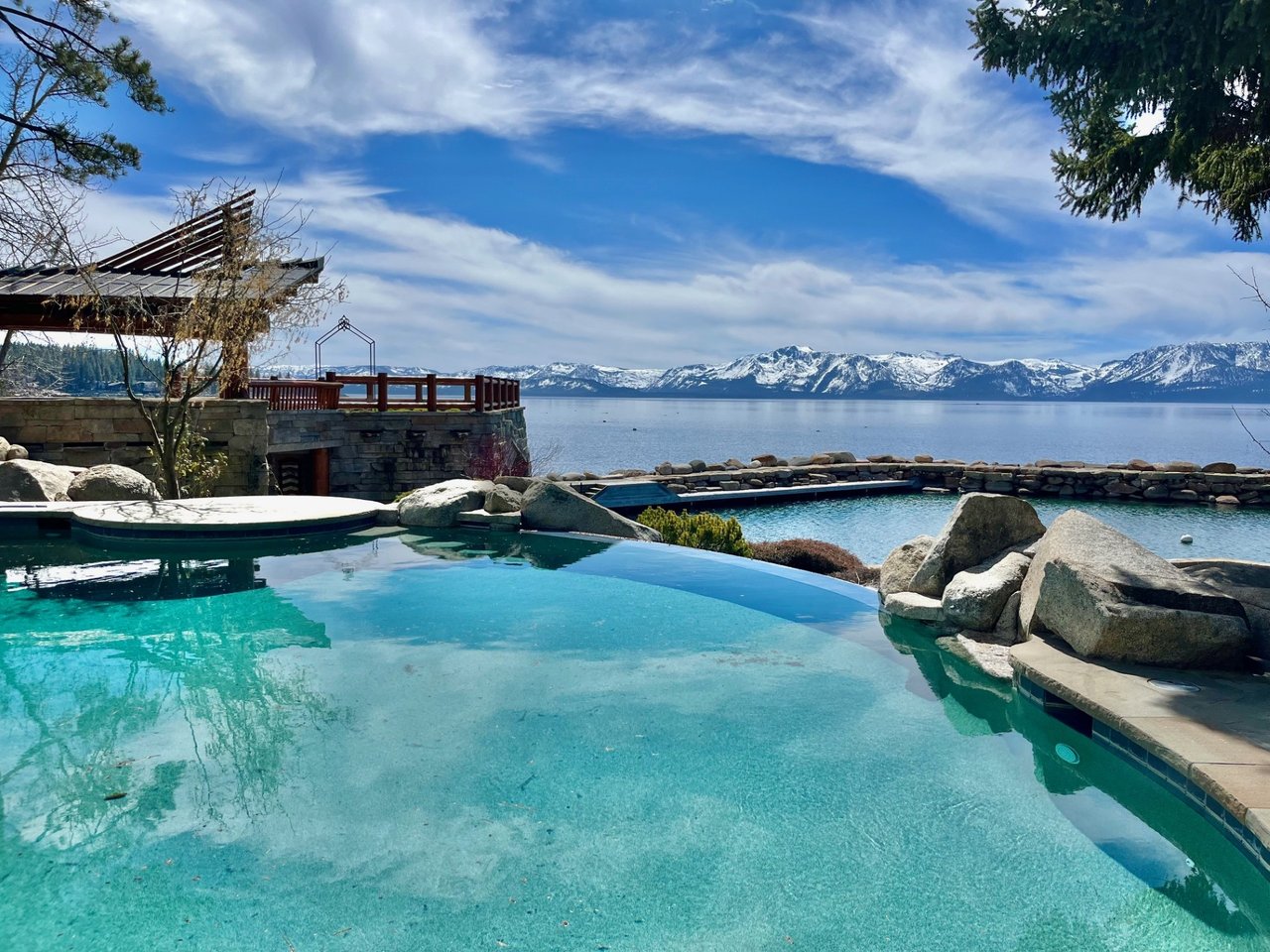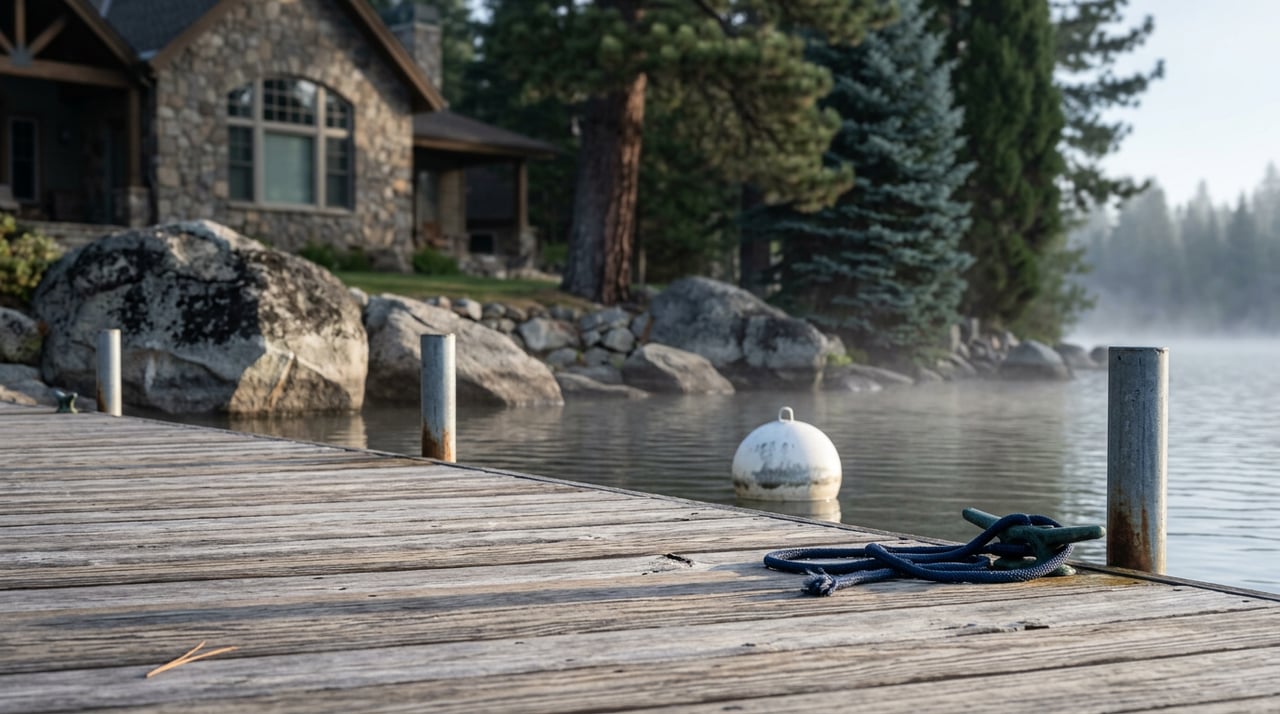
Walk two shoreline lots in Crystal Bay this summer and the tape measure will tell you they're nearly twins. Same rough frontage, same granite-and-pine setting, same three-mile trail out front. The asking prices are not twins. One lists millions above the other, and the gap has nothing to do with the house sitting on the land. It comes down to a piece of paper that never shows up in the listing photos: whether that parcel already holds a legal pier or buoy permit, and whether that permit can move to a new owner.
That distinction has become the real pricing mechanism on Lake Tahoe's Nevada shore, and it is easy for a buyer comparing homes on frontage and finish alone to miss it entirely.
The Line That Doesn't Show Up in the Listing
Owning shoreline at Lake Tahoe does not automatically come with the right to build or use a structure over the lakebed. A pier, a mooring buoy, a boat lift, all of it sits under a separate layer of permitting controlled by the Tahoe Regional Planning Agency, the bi-state authority that has governed the Basin's shorezone since Congress ratified the compact in 1969. A homeowner can own the sand and the granite outright and still have no legal path to a dock.
That matters more at Tahoe than almost anywhere else in the country, because the supply of permits is not just limited. It is fixed.
Why the Supply Never Grows
TRPA's Shoreline Plan, adopted in October 2018, lifted a moratorium on new shorezone structures that had been in place for decades. Lifting the moratorium sounds like it opened the door. What it actually did was replace an outright freeze with a hard ceiling: up to 128 new private piers across the entire lake, released through a lottery held every two years, with a preference written into the code for shared, multiple-parcel piers over single-owner docks. Up to 1,486 new private moorings, including buoys, boat lifts, and slips, are authorized under the same plan, and only 15 percent of the remaining pool can be released in any given year.
Every existing mooring also has to be registered and permitted through TRPA's own tracking system, and if a buoy was installed decades ago without a permit and never gets registered, it becomes a liability the day escrow closes rather than an amenity.
The lottery mechanics make the scarcity concrete. TRPA's most recent pier allocation period drew 56 proposals, of which 52 were eligible for the drawing. Of those, TRPA allocated exactly two single-parcel piers, both on the California side, and eleven multiple-parcel piers split between six on the Nevada shore and five in California. Fifty-two eligible applications. Thirteen piers allocated. That is the actual odds a buyer is up against if they assume they can simply add a dock later.
The mooring side runs on its own annual clock. Lake Tahoe Info’s Mooring Registration page lists the most recent lottery window as opening October 1, 2025 and closing November 14, 2025, with the drawing held in late November or early December. It reopens every fall. Under TRPA's fee schedule effective January 20, 2026, entering that lottery costs a nonrefundable $368 eligibility review fee, and if selected, the permit application for a single new buoy runs $1,581 before construction, inspection, and annual registration are even factored in. A new pier application carries a minimum fee of $6,623.
None of that guarantees a permit. It only buys a ticket.
What the Odds Look Like on Lakeshore Boulevard
Nowhere is the pier and buoy premium easier to see than along Lakeshore Boulevard, the stretch of Incline Village shoreline where the lake's biggest transactions concentrate.
A property on Speedboat Avenue with just over 110 feet of frontage came to market built around a private dock platform tucked between granite boulders and a mooring buoy. A short distance away, a home called Sandy Shores sits on roughly 106 feet of Nevada frontage with a sandy beach as its centerpiece. Similar frontage numbers on paper. What separates them in practice is what TRPA has already approved for that specific parcel.
Shared ownership structures show the same math from the opposite direction. Crystal Bay Cove, a 36-unit lakefront complex, built its entire value proposition around a shared deep-water pier and a buoy field. HOA dues there run close to $1,200 a month in 2026.
At the very top of the market, frontage and permit status together set the ceiling rather than square footage. In 2026, two closings on Lakeshore Boulevard reset the record books for Tahoe. Reporting on the transactions described one as an estate near 21,000 square feet with more than 200 feet of frontage, a sale that bundled in a $7 million adjoining parcel and closed at $125 million. Earlier that same year, the same buyer entity had quietly closed on another Incline home for $46 million. The $125 million sale nearly doubled the prior Tahoe residential record of $62 million, also set in Incline Village. The transactions underscore how frontage and shorezone permit status can affect value. Frontage and permitted shorezone rights cannot be recreated on a different lot, no matter how much is spent building.
Recent market tracking on Nevada-side lakefront sales backs this up with a number: a permitted private pier adds roughly $500,000 to $2 million in value to a comparable parcel that lacks one. That is not a finish upgrade or a square-footage premium. It is the price of an asset the market cannot manufacture more of.
The Line Item Worth Negotiating Before You Waive Contingencies
For a buyer comparing two similarly priced Incline Village or Crystal Bay lakefronts, the frontage measurement on the listing sheet is only the starting point. The questions that actually determine value sit in TRPA's own records, not in the marketing copy:
Is there a currently valid, registered permit for any pier, buoy, or boat lift on this specific parcel? The permit status is worth confirming before closing. Is the existing structure inside a shared HOA allocation, like Crystal Bay Cove's fixed 36-buoy field, where the number of moorings is capped regardless of how many units eventually want one? And if there is no existing structure at all, is a new permit even a realistic possibility, given that the most recent pier lottery turned 52 eligible applications into 13 allocations?
A quick reference on how the two systems compare:
| Piers | Moorings (buoys, lifts, slips) | |
|---|---|---|
| Lakewide cap | Up to 128 new private piers | Up to 1,486 new private moorings |
| Release cycle | South Tahoe Now reports a lottery every two years, with up to 12 per cycle | Annual lottery, 15% of remaining pool per year |
| Recent cycle result | 13 allocated from 52 eligible applications | Next window opens each October |
| Entry fee | $6,623 minimum application fee | $368 lottery eligibility fee, $1,581 per buoy permit |
None of these numbers appear on a listing sheet, and none of them can be estimated by looking at a photo of a dock. They live in TRPA's Parcel Tracker and mooring registration system, and confirming them in writing before removing contingencies is the single diligence step that separates buyers who overpay for an assumption from buyers who pay for an asset that actually exists on paper.
A Few Straight Answers
If a lakefront home doesn't have a pier, can I just apply for one after closing? You can apply, but the odds are not in your favor. The most recent pier lottery drew 56 proposals and allocated 13 piers total. A realistic purchase plan treats a permit as something to verify before closing, not something to add after.
Does a shared HOA buoy field count the same as a private pier for value? It provides real water access. A shared buoy and a private, pier are different assets with different resale ceilings.
What should I ask a seller before writing an offer on a lakefront listing? Request the current TRPA permit number for any pier, buoy, or lift on the parcel and confirm in writing that the permit is registered, current, and transferable to a new owner. If the answer is unclear, that uncertainty belongs in the negotiation, not in an assumption.
The permit paperwork rarely makes it into a listing description, but it is doing more work than the finish level, the square footage, or almost anything else on the property to set the price. Buyers and sellers navigating that distinction on the Nevada side of the lake deserve someone who reads TRPA's records as closely as the appraisal.
Tahoe Icon works exclusively in Incline Village, Crystal Bay, and the East Shore, and can walk through a specific parcel's pier and mooring history before you write an offer or price a listing. Schedule a private consultation to start there.
This article is general information, not legal, tax or financial advice. Consult a qualified professional about your situation.